

In our upcoming post, we will be highlighting the top 6 essential meat slicers for home use. This roundup will feature products such as the FOHERE Electric Meat Slicer with 2 Blades, Progress EK3683P Electric Meat Slicer, and Unold Curve Silver Food Slicer 78866. Stay tuned to discover the best options for effortlessly slicing meat in your own kitchen.
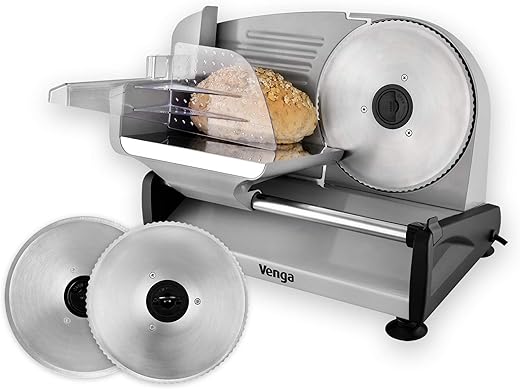
Venga! Electric Food Slicer VG AS 3005 BS

We have here the Venga! Electric Food Slicer, a versatile kitchen tool that offers a power of 200 W and a cutting thickness adjustment knob from 0 to 15 mm. With two strong stainless steel blades – a serrated one for bread and firm foods, and a smooth one for meats and vegetables – this slicer ensures neat and easy cutting. The child safety features, elegant design, and easy cleaning make it a practical addition to any kitchen. Reviews mention its ease of use for slicing various foods, with some cautioning about fragility in parts. Overall, a handy appliance for home use.

OSTBA SL-518 Electric Deli Food Slicer

With the OSTBA SL-518 Electric Deli Food Slicer, we can effortlessly slice meat, cheese, bread, and more to our desired thickness, thanks to its adjustable 0-15mm cutting range. The safety lock feature ensures secure operation, while the stainless steel blade promises precise cuts every time. Easy to clean and compact for convenient storage, this durable slicer has garnered rave reviews for its efficiency and ease of use. Whether preparing antipasti platters or slicing cooked ham for sandwiches, the OSTBA slicer offers professional results at home, making it a valuable addition to our kitchen arsenal.
FOHERE Electric Meat Slicer 200W, 19cm Blades
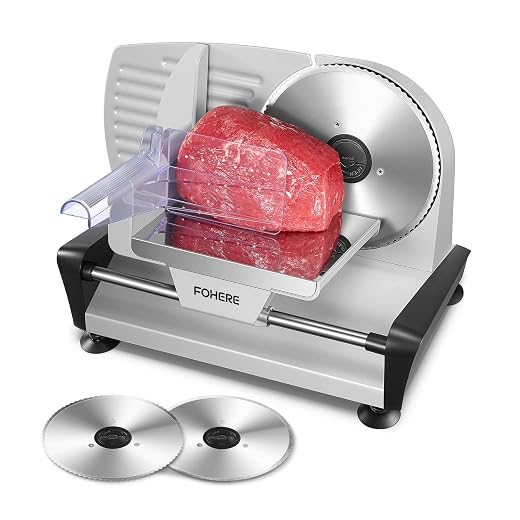
With its 200W power, adjustable thickness control, and two 19cm blades, the FOHERE Meat Slicer is ideal for slicing a variety of ingredients like meat, cheese, and bread with precision. The non-slip suction cups and safety food pusher ensure stable operation and finger protection. Users appreciate the slicer’s effectiveness for slicing meats thinly and uniformly, making it a valuable addition to any home kitchen.
FOHERE Electric Meat Slicer with 2 Blades

When it comes to slicing our favorite meats and foods at home, we found the FOHERE Electric Meat Slicer Machine to be a handy tool to have in our kitchen. The adjustable thickness control from 0-15mm allowed us to slice various ingredients with precision, while the 2 removable stainless steel blades provided options for different slicing needs. Though some users noted it might not match commercial slicers in power, we appreciated its ease of use and quick cleanup process, making it a convenient addition to our kitchen arsenal. Whether we’re slicing meats for jerky, homemade bacon, or cutting bread with clean slices, this slicer has proven to be a reliable companion for our culinary adventures.
Progress EK3683P Electric Meat Slicer

We found the Progress EK3683P Electric Meat Slicer to be a versatile addition to any kitchen. With its adjustable cutting thickness from 1mm to 15mm, it offers the perfect slice every time. The safety features like the thumb guard and non-skid rubber feet add peace of mind while using this convenient and stylish slicer. It’s great for slicing bread, meats, and cheeses, and its compact design makes it easy to store. Overall, it’s a handy tool that simplifies food prep and saves money on store-bought meats.
Unold Curve Silver Food Slicer 78866

With the Unold Curve Silver Meat and Food Slicer 78866, we can easily slice a variety of foods like a pro. This electric slicer is perfect for home cooks looking to elevate their culinary skills, whether hosting a dinner party or preparing a snack. The slicer’s 17cm stainless steel blade allows for precise slicing, adjustable from 0-15mm, ensuring perfect cuts every time. Plus, its folding design for easy storage and simple cleaning process make it a convenient addition to any kitchen. The lightweight build and safety features like the 2-point safety switch and hand protector make slicing meats, cheese, and bread a breeze. Get ready to impress your guests with restaurant-quality presentations using the Unold Curve Slicer!
Alternative Cutting Options


Operating Instructions for Your Meat Slicer
- Ensure the meat slicer is placed on a stable and flat surface before using it
- Adjust the thickness setting according to your preference and the type of meat being sliced
- Always use the safety guard to protect your hands from the sharp blade and follow the manufacturer’s instructions for cleaning and maintenance
Pricing Options for Meat Slicers
- Budget range ($50-$100): Meat slicers in this price range are typically smaller, manual models suitable for occasional use at home. They may have fewer features and a lower power output compared to higher-end models
- Mid-range ($100-$300): Meat slicers in this range are usually larger, more powerful, and designed for more frequent use. They may have adjustable thickness settings, serrated blades, and additional safety features
- Premium range ($300 and above): Meat slicers in this price category are professional-grade machines suitable for heavy-duty use in commercial kitchens or butcher shops. They often have high-powered motors, precision slicing capabilities, and durable construction for long-lasting performance
Slicing FAQs
Yes, a meat slicer can be used to slice cheese and other dairy products. However, for best results, it is recommended to use a meat slicer that has a smooth blade and adjust the thickness settings accordingly. It’s important to clean the slicer thoroughly after using it with dairy products to prevent cross-contamination.
When using a meat slicer to slice different types of meat like beef, ham, or turkey, there are some general guidelines to keep in mind. It’s crucial to ensure the meat is properly chilled and semi-frozen to get clean, even slices. Adjusting the slicer’s blade speed and thickness based on the type of meat can also help achieve the desired results. Additionally, always clean and sanitize the slicer before and after each use to prevent cross-contamination. Remember to follow the manufacturer’s instructions and guidelines for safe operation.
When comparing a meat slicer to using a knife to slice meat, a meat slicer offers more precision and consistency in thickness of slices. It allows for faster slicing and is ideal for slicing large quantities of meat efficiently. On the other hand, using a knife gives you more control over the thickness and angle of the slices, but it requires more effort and skill to achieve uniform slices.
Using a meat slicer in a commercial kitchen setting offers several benefits. Firstly, it allows for consistent and uniform slices, ensuring presentation and portion control. This can help maintain quality and customer satisfaction. Secondly, it saves time and labor compared to hand-slicing, increasing efficiency in food preparation. Additionally, a meat slicer can handle large quantities of meat quickly, which is crucial in a busy commercial kitchen. Lastly, it enhances safety by reducing the risk of accidents and injuries associated with manual slicing.
Yes, there are regulations and guidelines that need to be followed when using a meat slicer in a commercial kitchen. The Occupational Safety and Health Administration (OSHA) sets specific requirements for the safe use of food slicers in the workplace. Some general guidelines include ensuring that employees are properly trained on how to use the equipment, using personal protective equipment like cut-resistant gloves, following proper cleaning and sanitizing procedures, and maintaining the equipment regularly to prevent accidents and cross-contamination. It’s important to adhere to these regulations to ensure a safe working environment and prevent foodborne illnesses.
When looking for a meat slicer for home use, there are a few key features to consider. Firstly, it’s important to look for a slicer with an adjustable thickness setting so you can customize the thickness of your slices. Safety features like a blade guard and a safety switch are crucial to prevent accidents. A powerful motor will ensure smooth slicing, while a durable construction will guarantee longevity. Easy cleaning and maintenance features like removable parts and a smooth surface are also essential. Lastly, consider the size and weight of the slicer to ensure it fits in your kitchen and is easy to store when not in use.
Sure thing! The main parts of a meat slicer typically include a blade, a carriage or platform to hold the meat, a thickness adjustment dial, a power switch, and safety features such as a blade guard and a food holder. These components work together to allow for efficient and precise slicing of meat and other food items.
Sure! Some common problems that can occur with a meat slicer include dull blades, uneven slicing, and difficulty in cleaning. Dull blades can be fixed by sharpening or replacing them. Uneven slicing may be due to improper blade alignment, which can be adjusted. Difficulty in cleaning can be resolved by following the manufacturer’s recommended cleaning instructions and ensuring all parts are thoroughly cleaned and dried after each use.
A manual meat slicer requires the user to operate a handle to move the blade back and forth to slice the meat. On the other hand, an automatic meat slicer uses a motor to move the blade automatically, reducing the effort needed by the user. The automatic slicer is more suitable for high-volume slicing tasks, while the manual slicer is often used for smaller quantities or more precise cuts.
To adjust the thickness of the slices on a meat slicer, you can typically use the knob or dial located on the machine. By turning this knob clockwise or counterclockwise, you can control how thin or thick you want the slices to be. It’s important to refer to the user manual of the specific meat slicer you are using for detailed instructions on adjusting slice thickness.
These slicers seem a bit pricey, any budget-friendly options?
I’ve used one of these models before and it worked like a charm.
I wish there was more emphasis on safety features.
Overall, a helpful guide for anyone looking to buy a meat slicer.
I appreciate the detailed pros and cons breakdown.